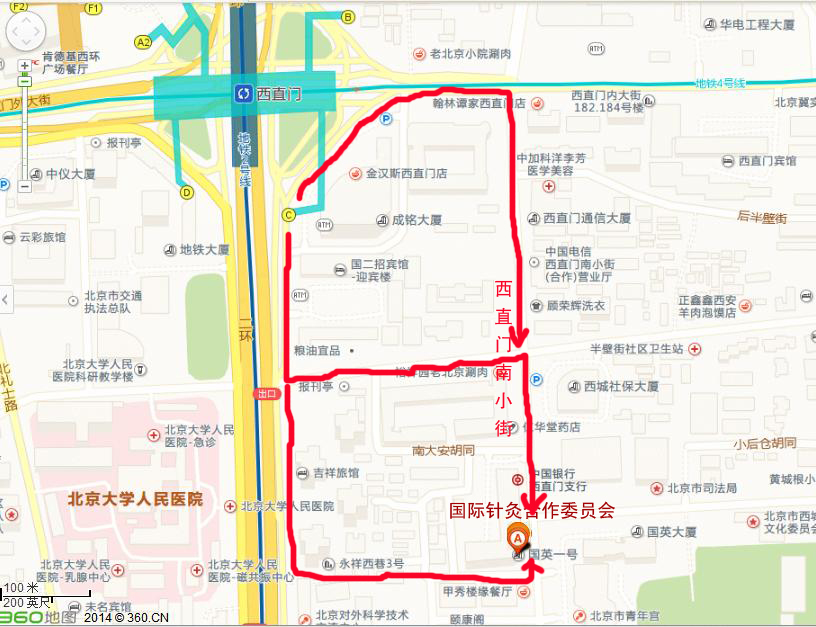
Address: Beijing's xizhimen south street, xicheng district
The British garden 1 floor. Room 824
Zip code: 100035
Telephone: 010-58562339
Fax: 010-58562339
Email address: cngjzj@163.com
Web site (click on the url link directly left) :
http://www.cngjzj.com/
Blog (click on the url link directly left) :
http://blog.sina.com.Cn/CNGJZJ
To xizhimen south street, xicheng district building to the British garden route
L airport line 1
Take the airport shuttle from the airport, the dongzhimen station transfer to metro line 2 to xizhimen direction and get off at xizhimen station, from C outbound, go straight to the east 100 meters on the right side to xizhimen south street, north to walk to the t-junction namely to the British garden 1 floor downstairs.
L airport line 2
From the capital airport take airport bus to xidan, get off at no.22, take a taxi to xizhimen south street English garden 1 floor.
L bus subway near:
106 bus GuanYuan: 107 road, express way
Bus: xizhimen south road 387, 44 road, inner ring 800, 816 road, inner ring 820, 845 road
Che zhuang: subway line two
Xizhimen subway: metro line 2
Buses and attempts: 107 road, 118 road, 701 road
Buses and north zhuang: 209 road, 375 road, 392 road
2015年09月01日
 复制链接
复制链接
 打印
打印
 大 中 小
大 中 小
Standardized community intervention can help improve patient behavior
The high risk population antihypertensive drug use ratio increased by 25.5%
The 2015-08-25
Source: health
Report from our correspondent (reporter wang Dan) has completed jointly by China and India, researchers in patients at high risk of disease of heart head blood-vessel practical standardized prevention intervention study (Simcard studies) show that using electronic decision support system, and can improve the resource scarcity areas grassroots medical service ability, thus promoting prevention of cardiovascular disease, let more people benefit. The study published in the international famous medical magazine is the journal circulation.
The study of Tibet university jointly by George health institute Peking University health science, and public health foundation co-sponsored, India in 2012 ~ 2013 in the Tibet autonomous region and India's haryana 47 villages, and included a total of 2086 1036 (China, India, 1050) is greater than the age of 40 in patients at high risk of cardiovascular disease. The team of international and domestic disease of heart head blood-vessel management guide is simplified, developed a "2 + 2" mode of intervention, including the proper use of the two drugs (blood pressure medication and aspirin) and two kinds of lifestyle intervention (quitting smoking and reducing salt), mainly in order to easily integrate into the current medical service system. All intervention in village after village doctor training, using a smart phone based electronic decision support system (EDSS). The system can assist village doctor for clinical diagnosis and prompt its provide standards and real-time medical services for patients.
Comprehensive data show that in comparison with the baseline survey, after the intervention, the two countries involved in the research of the crowd on the antihypertensive drug use are net growth of 25.5%. At the same time, the Chinese group, systolic blood pressure significantly decreased 4.1 MMHG after intervention, aspirin use 24.5% growth rate.
The chief George health research institute, Beijing university health science professor emeritus Yan Lijing said that in health human resources areas, only rely on the workloads of specialized subject doctor is not feasible to implement the management of high-risk patients is unsustainable. The study proves that the management of the patient's tasks can be transferred to the grassroots health workers, and reduce the personal health spending. Although the study did not find the subjects have obvious change of lifestyle, but find through this way, can change the behavior of the grassroots medical workers and patients, such as open and use of drugs), so as to improve treatment effect.

 Your position is: